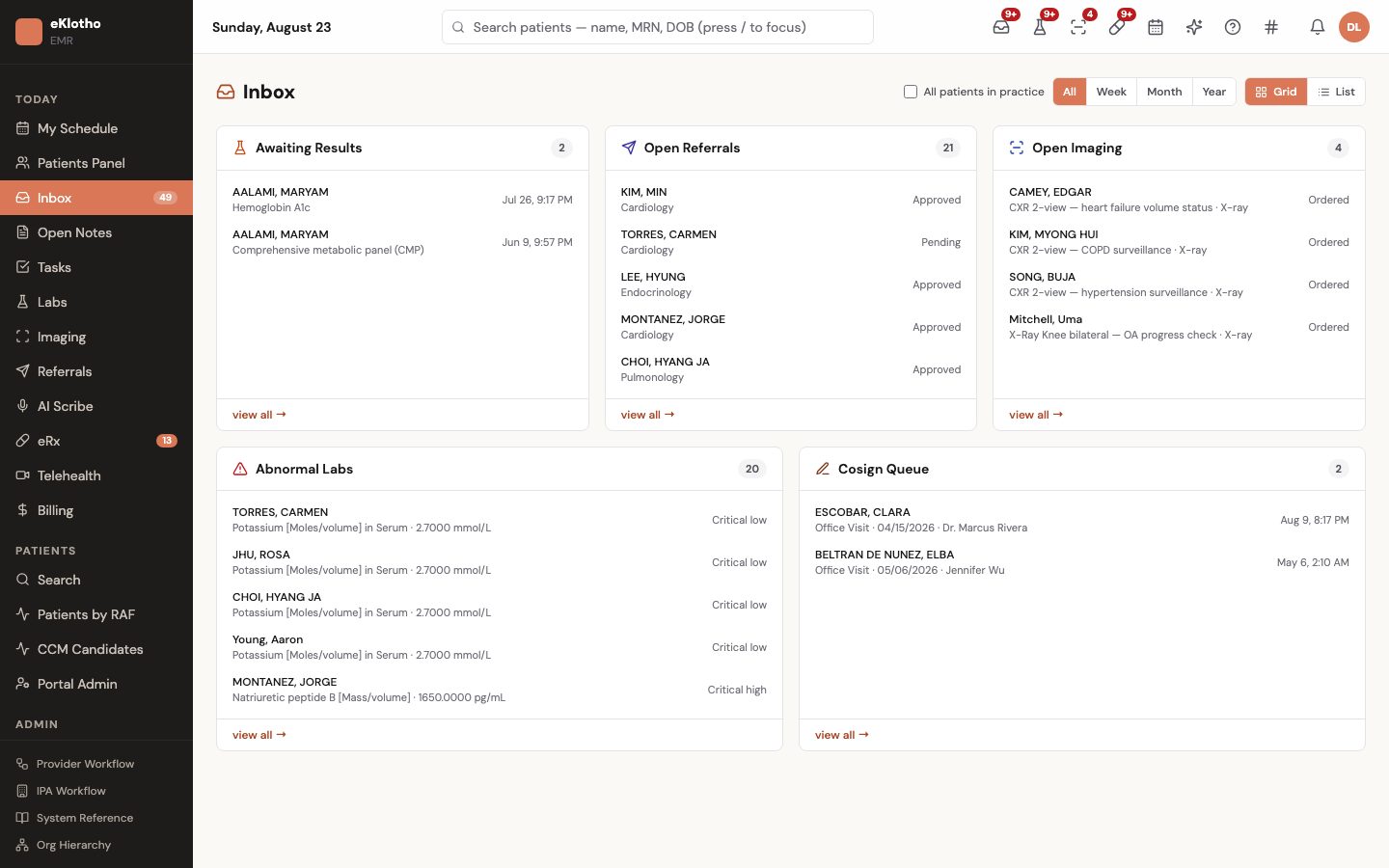
Most EMRs stop at the clinic wall. Payers, delegation, authorizations and quality live somewhere else, reconciled by interface engines, fax and phone. The eKlotho EMR is the clinical surface of a network platform: it shares the Nexus patient record and entity graph, so the patient in the chart is the same patient the plan covers and the IPA reports on. There is no second copy and no nightly sync. A clinician opens the inbox, sees today's patients, documents the visit — often from an AI-drafted note — sends the prescription, orders the labs and signs, and the signed encounter is already visible to billing, quality and the network.
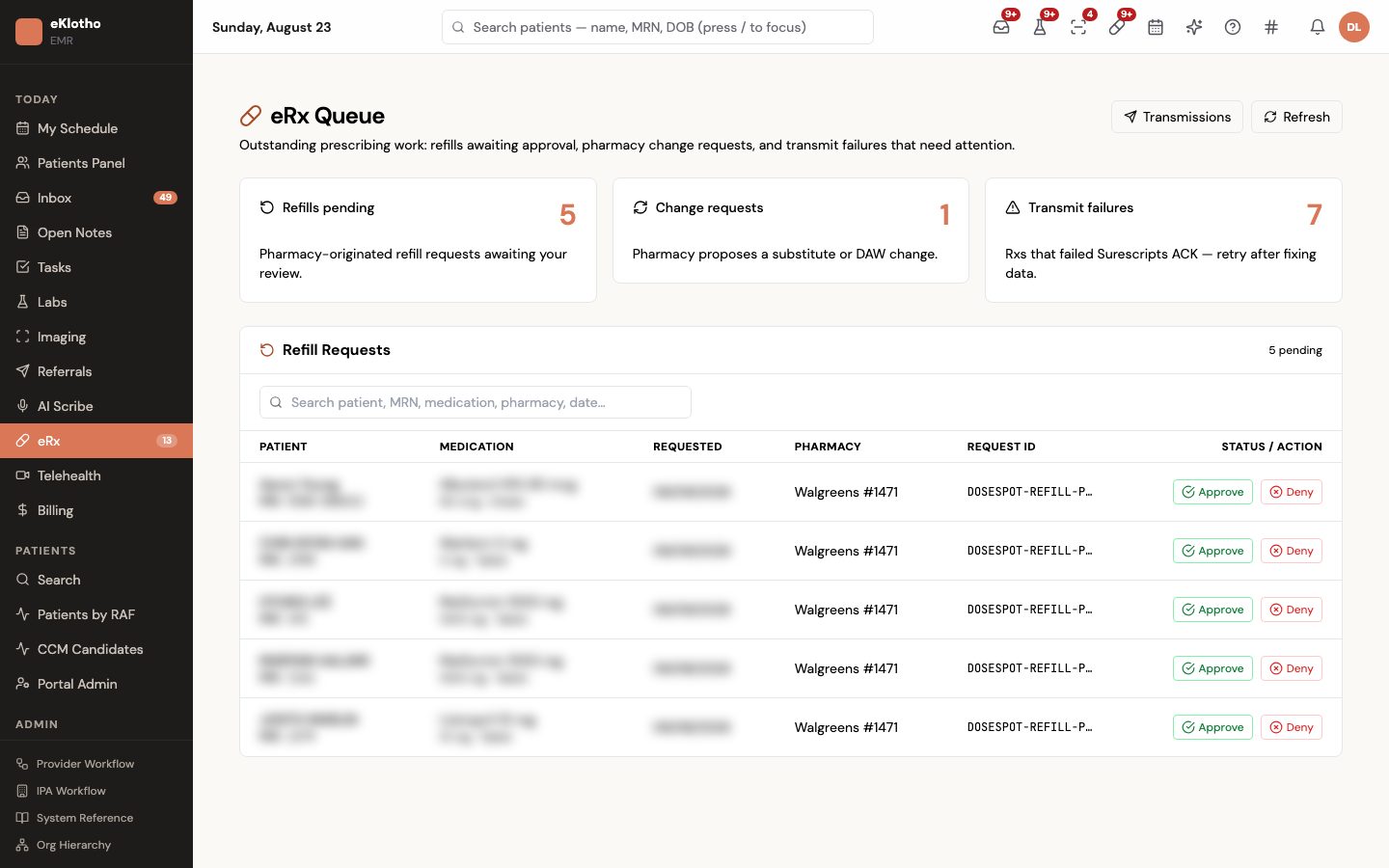
That does not make it only for network clinics. A standalone practice gets a complete EMR: an inbox-driven workflow, full coded charting, vendor-connected e-prescribing, lab and imaging orders, referrals, an ambient scribe, telehealth workflow, encounter billing, portal administration, reports and practice settings. A clinic inside an IPA additionally gets what no clinic-only EMR can offer — a referral that opens the IPA's own prior-authorization queue under the delegation contract, care gaps and RAF/HCC (risk-adjustment) context in the chart, and cross-clinic continuity on one record when a patient moves between sites.
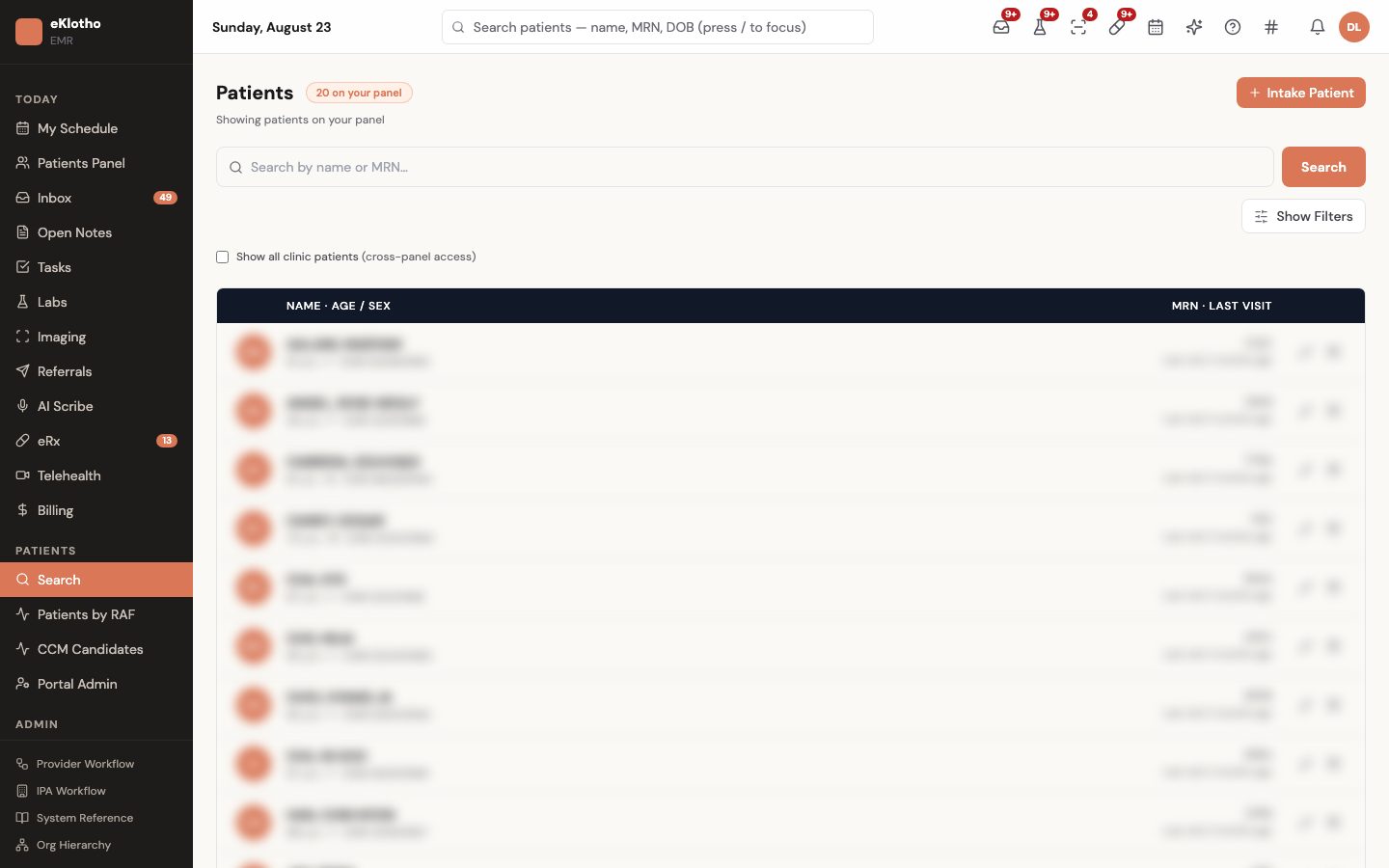
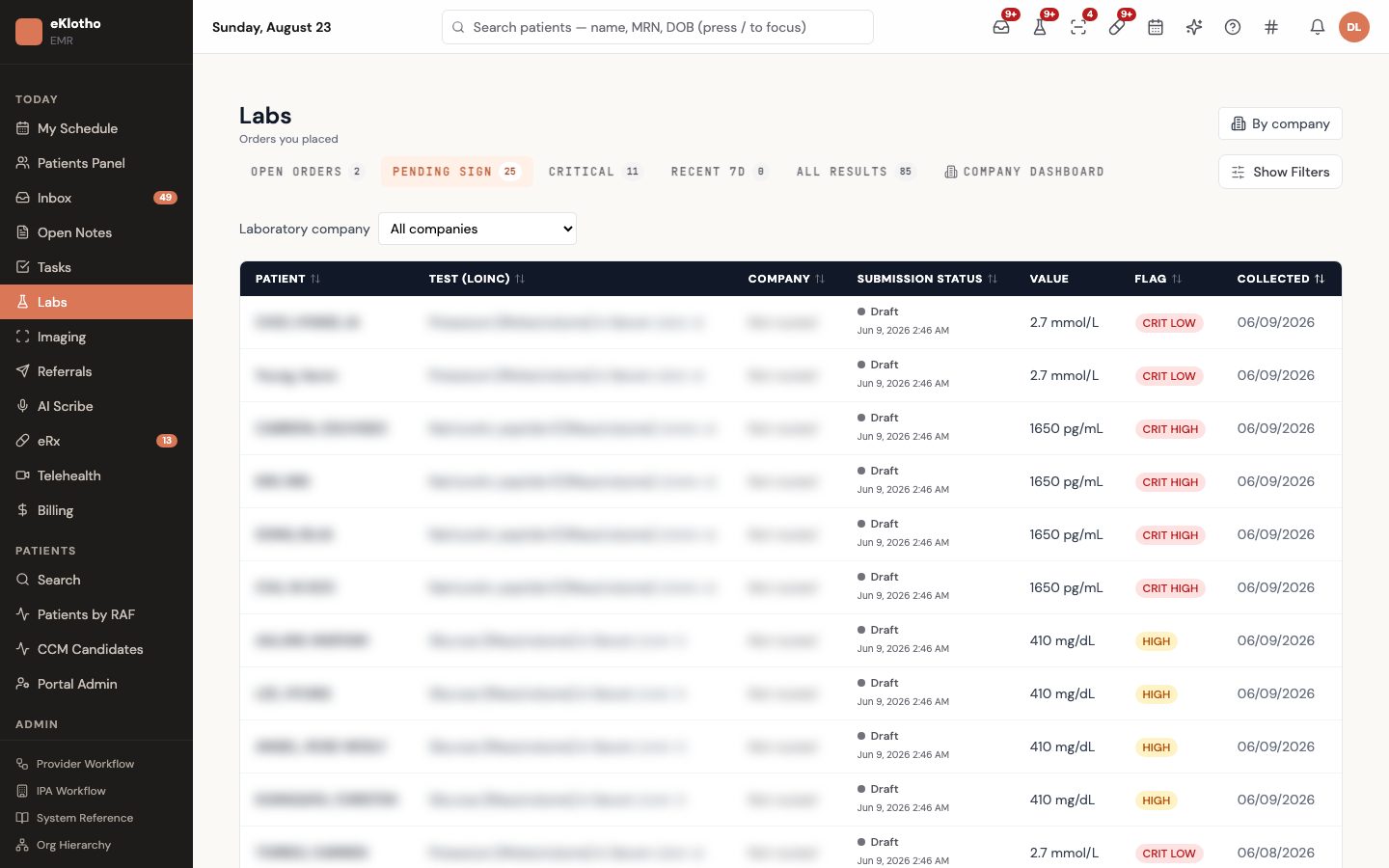
The chart is organized the way clinicians think: demographics and insurance preloaded from the shared record, a problem list coded in ICD-10, medications in RxNorm, allergies, immunizations, vitals, assessments and screenings, labs with LOINC codes, imaging, referrals, prescriptions, documents, consent and billing history, with RPM and CCM (remote monitoring and chronic care management) context and PACE sections where they apply. Signed notes lock and change only by addendum; patient timelines, merges and the per-chart access log are append-only, so the record can always answer what changed, when, and who did it.