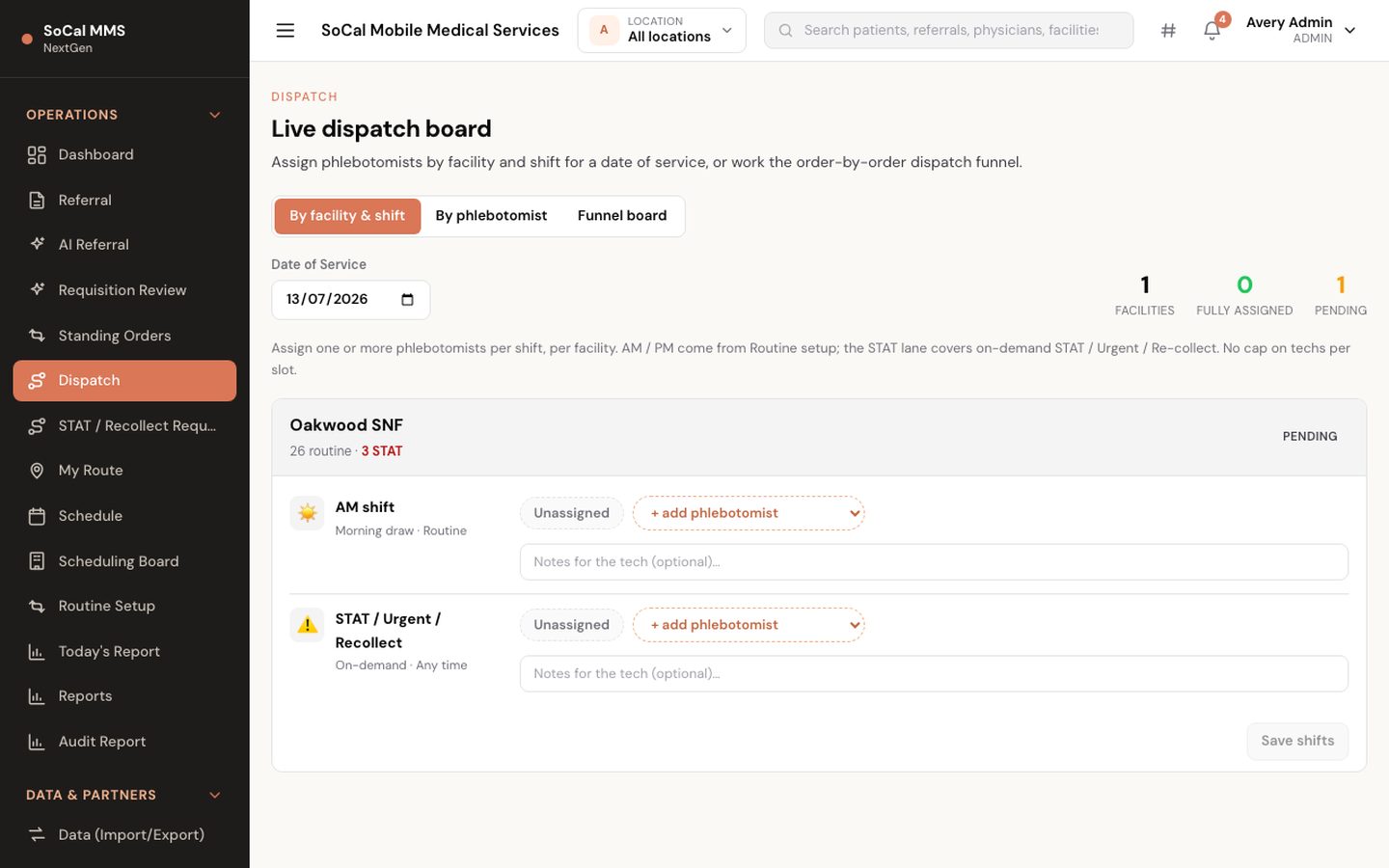
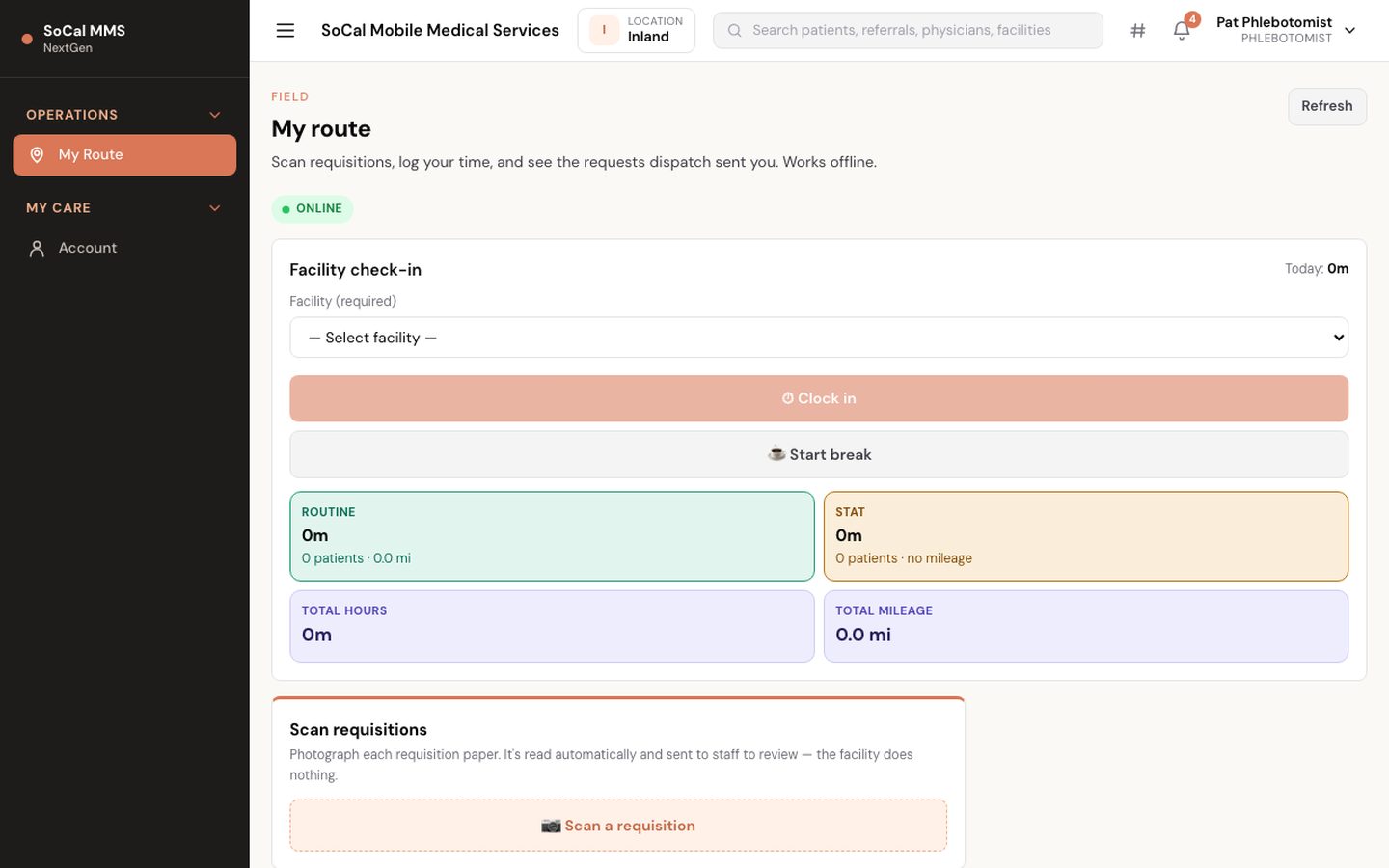
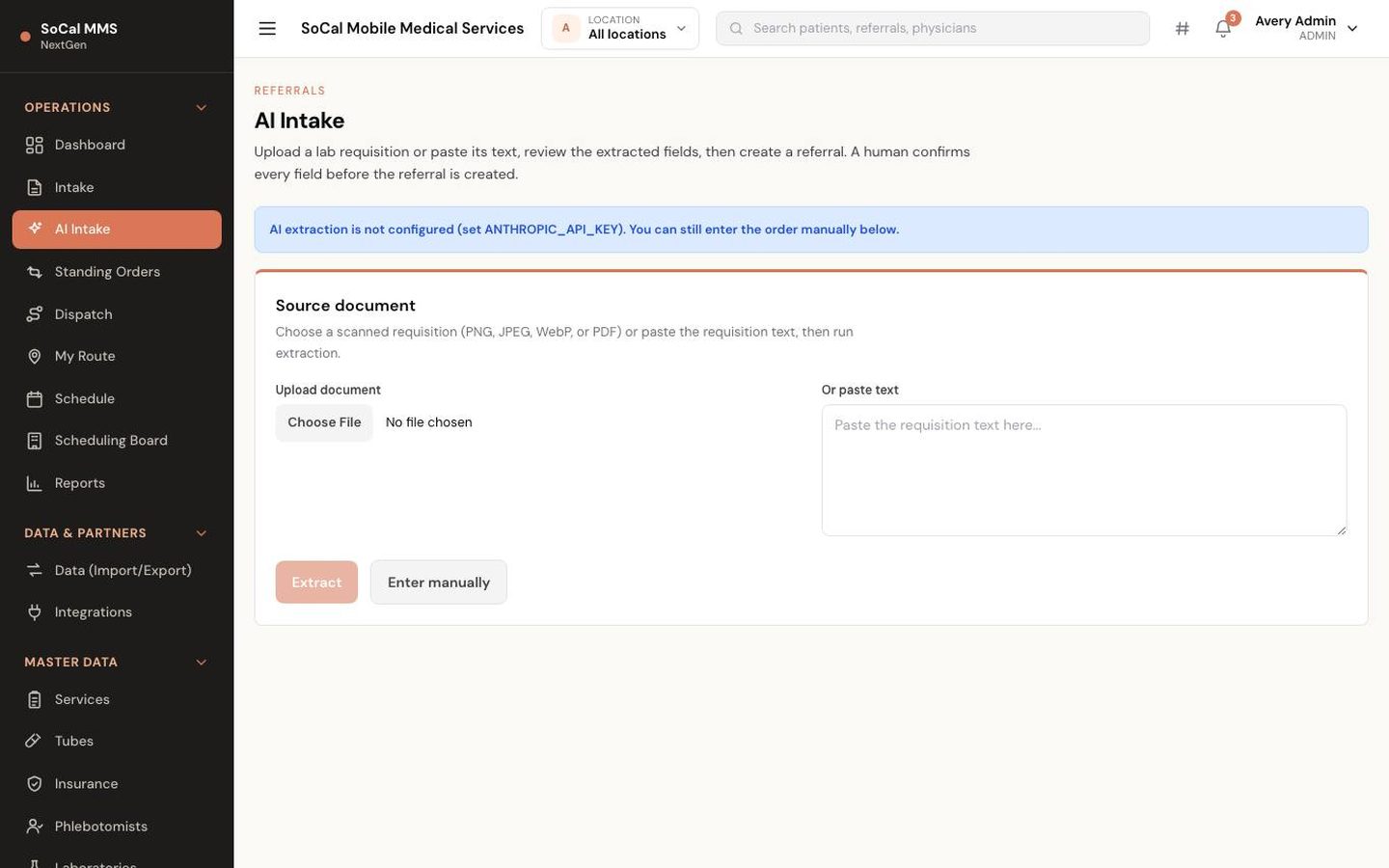
A mobile-phlebotomy service is a loop with the operator in the middle: a physician, clinic or long-term-care (LTC) facility refers a patient, intake turns the referral into an order with the right service, tubes and target laboratory, a dispatcher assigns a field phlebotomist who can reach the patient on the date of service (DOS), the specimen is collected and handed to the lab, and the result status comes back. SoCal Solution is the operations platform for that loop. Its service blueprint names the actors — patient, referral source, intake staff, dispatcher, field phlebotomist, laboratory — and gives each one a screen built for their part of the day, from the intake worklist to the phone the technician carries into a facility with no signal.
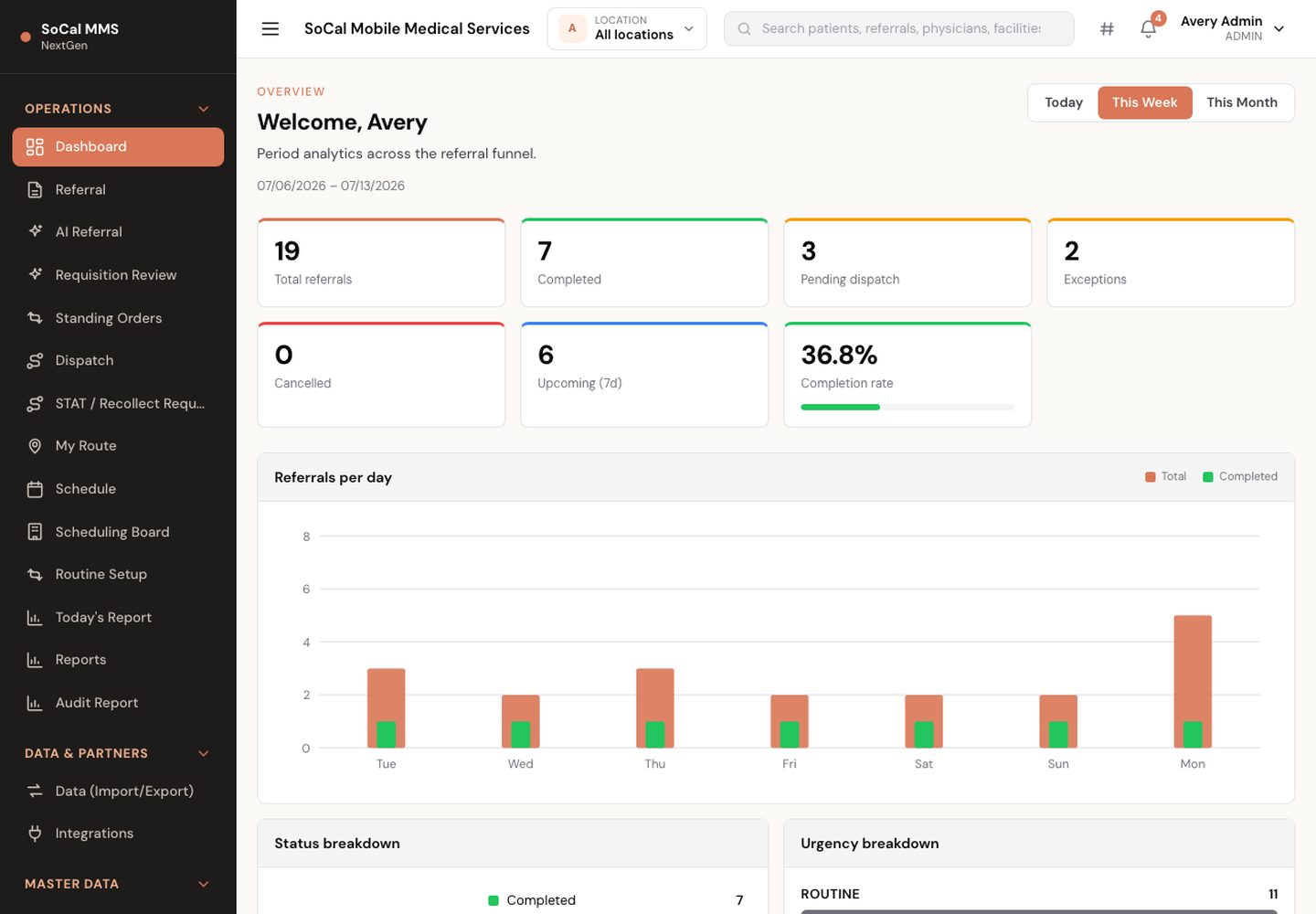
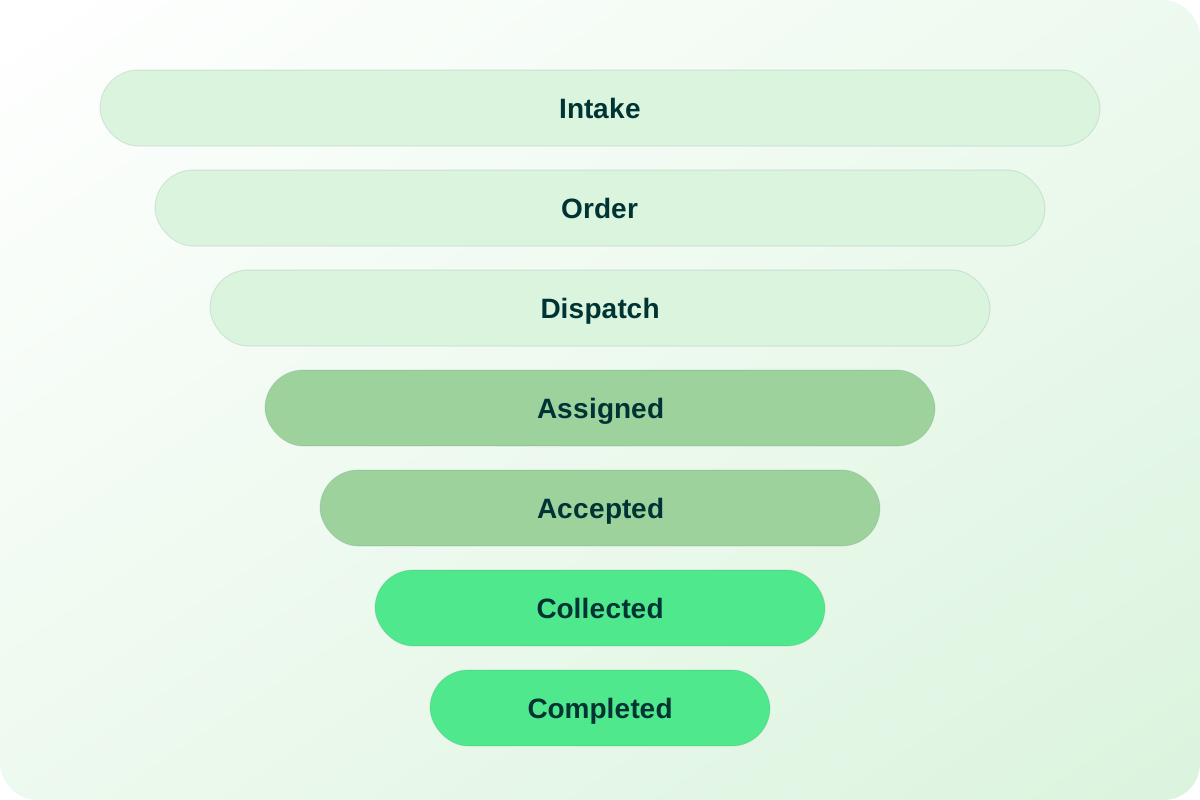
The spine of the product is one referral lifecycle, used unchanged on every screen and report: Referral Intake → Order Created → Pending Dispatch → Assigned to Field → Accepted by Tech (or Rejected → reassign) → Collected on DOS → Completed → Lab delivery, with the leakage states Service Hold, Cancelled and Pending Past DOS. The transitions between those stages are enforced by the API — a status card offers only the moves the current stage allows — and the dispatch board, the funnel report, the field activity report (FAR) and the dashboard all read the same status field, so 'dispatch rate' means the same thing to a dispatcher at 7 a.m. and to management at month end.
The blueprint also fixed what the operation needed beyond the funnel: urgency tiers (STAT, Urgent, Routine) with STAT sorting first everywhere; One-Time Visits and Standing Orders on cadences from daily to yearly; facility routines and AM/PM/STAT shift boards for LTC rounds; a chain-of-custody record per order; and a reporting layer that carries identifiers and categories only, never PHI. It was built first for a Southern California operator with field technicians across several regions, and the roles, funnel and field app apply to any organization that sends collectors to patients — draw-at-home programs, facility rounds, standing-order populations and STAT requests that have to be routed the same hour.