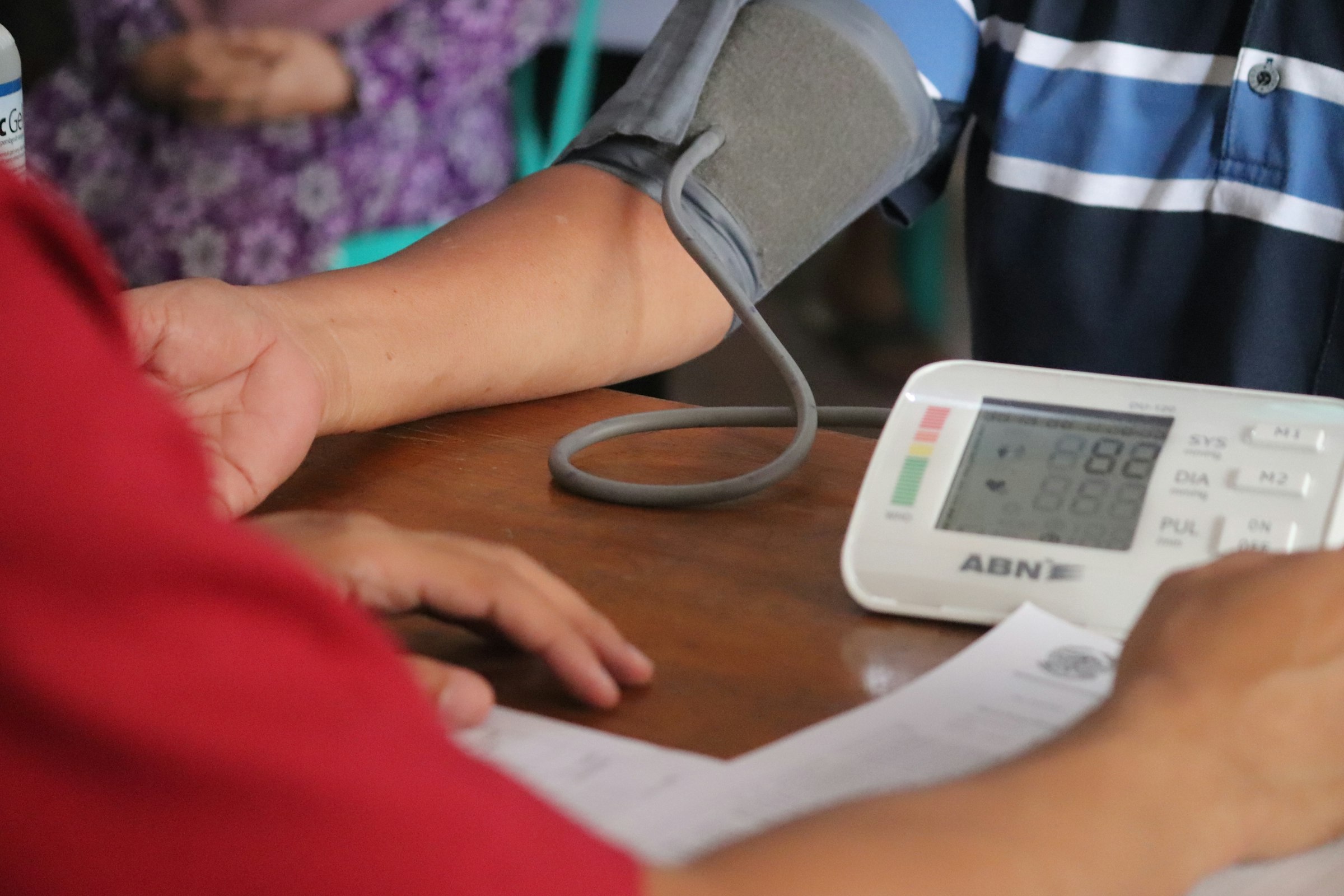
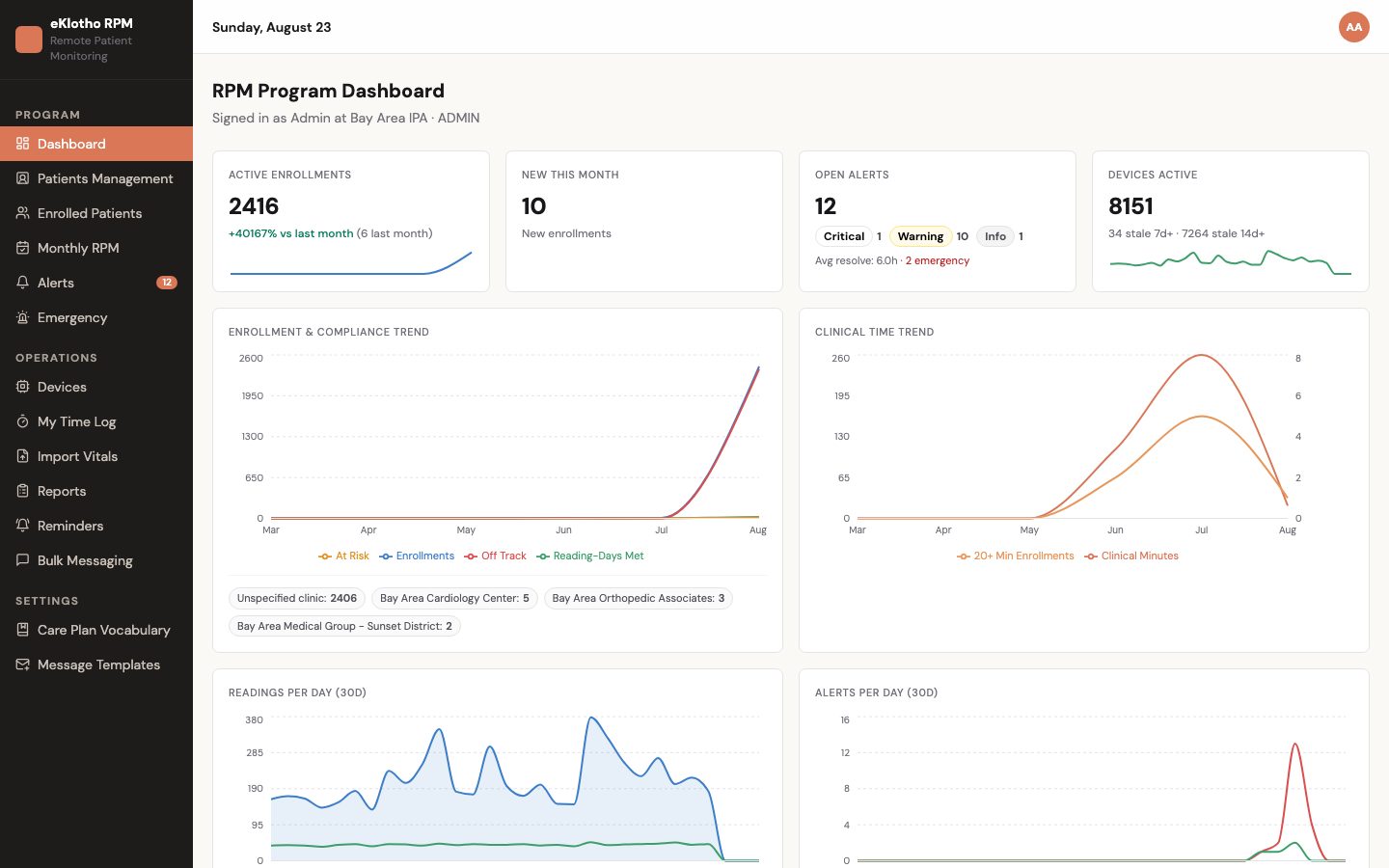
Remote Patient Monitoring (RPM) asks patients to measure at home — blood pressure, weight, glucose, oxygen saturation (SpO₂), temperature — and asks a care team to watch those readings between visits. The program side is where it gets hard: which patients are on track for the month, which devices have gone quiet, which readings need a call today, and how many minutes of care time were spent per patient. rpm.eklotho.com is built for that program side. It is the workspace for the program director, the care managers and the clinic staff who run RPM, and it sits on the same patient record as the eKlotho EMR, so a reading arrives once and everyone delegated to that patient sees it.
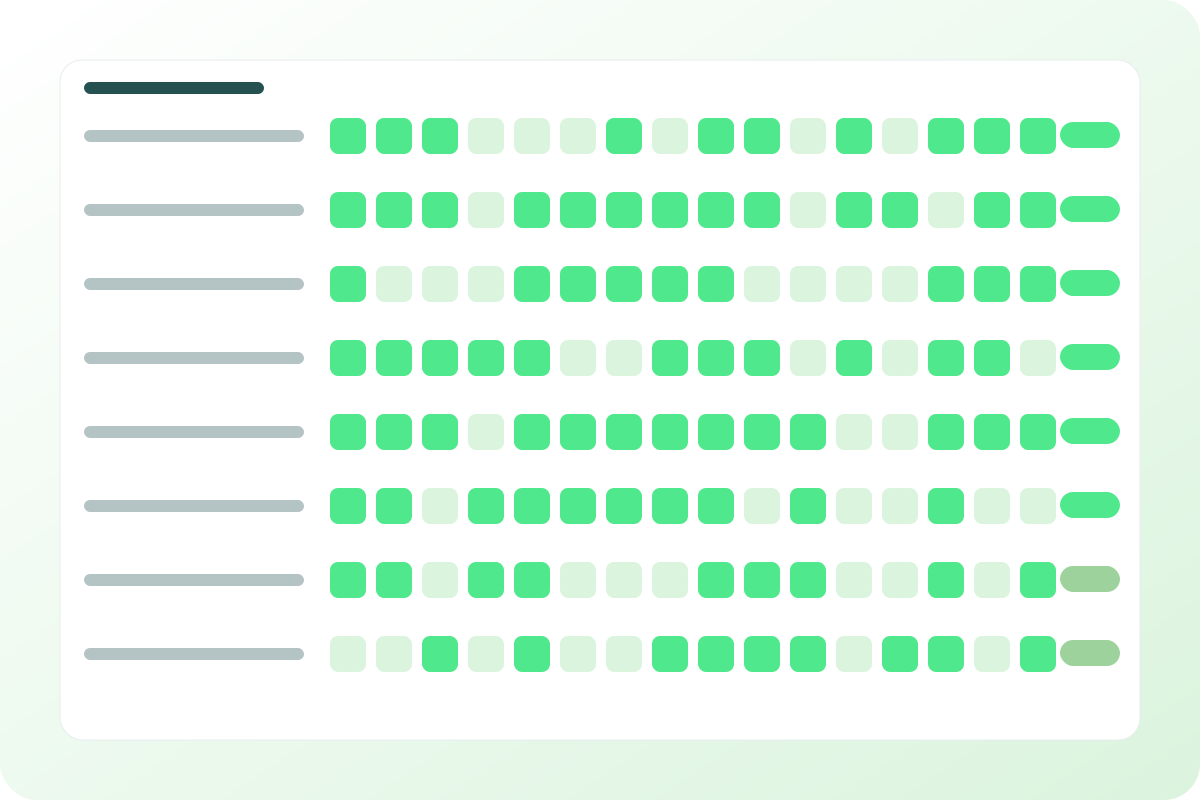
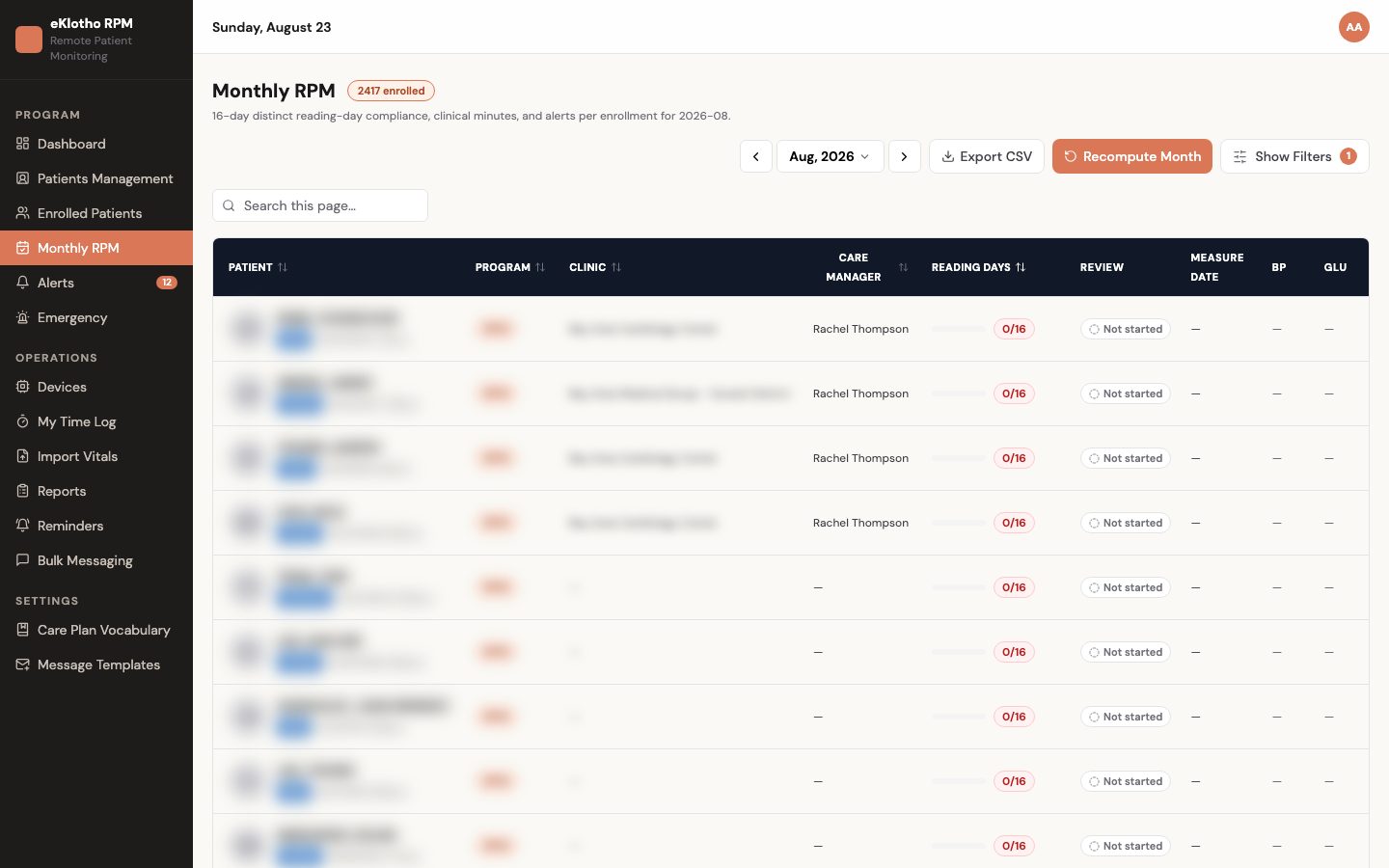
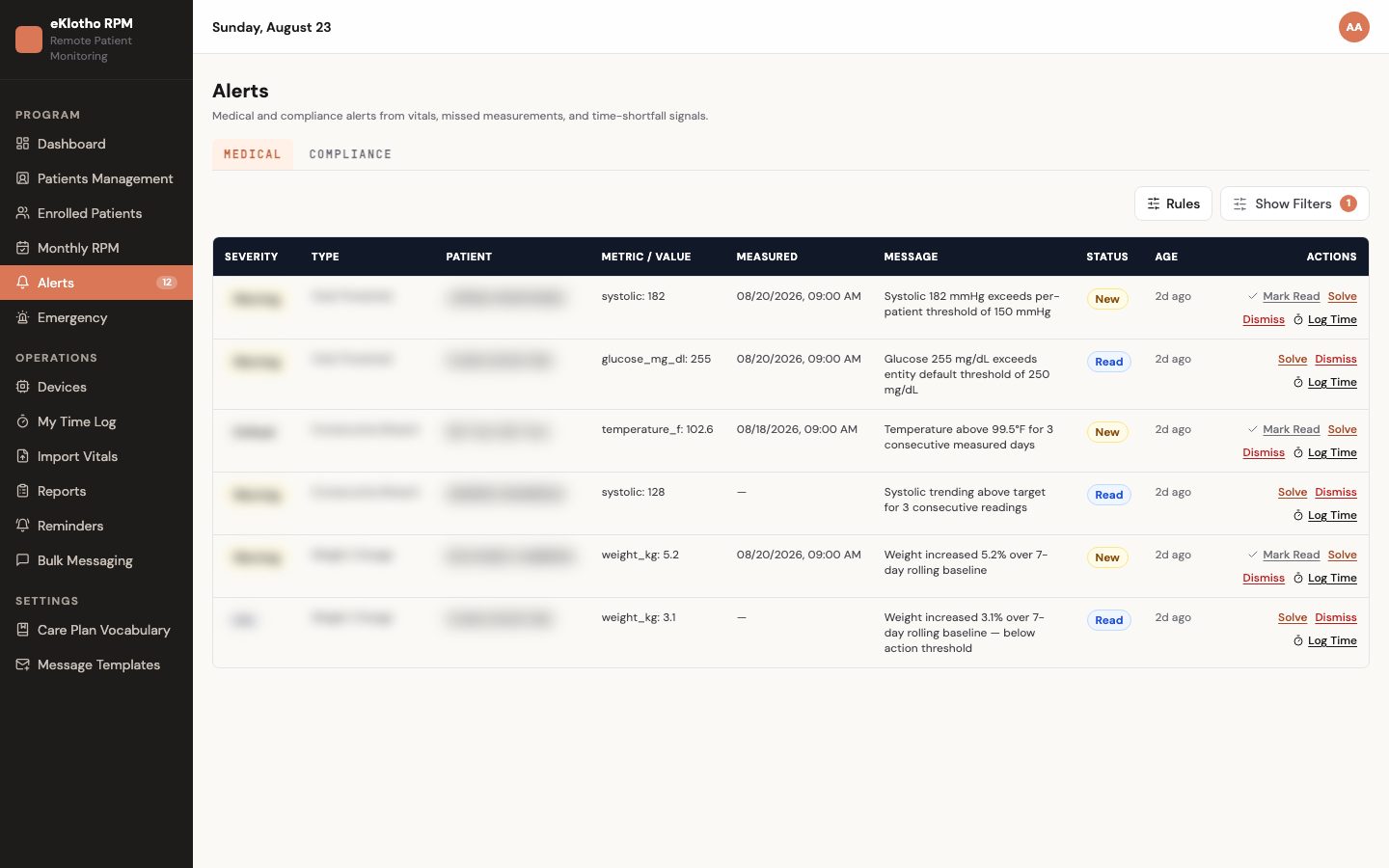
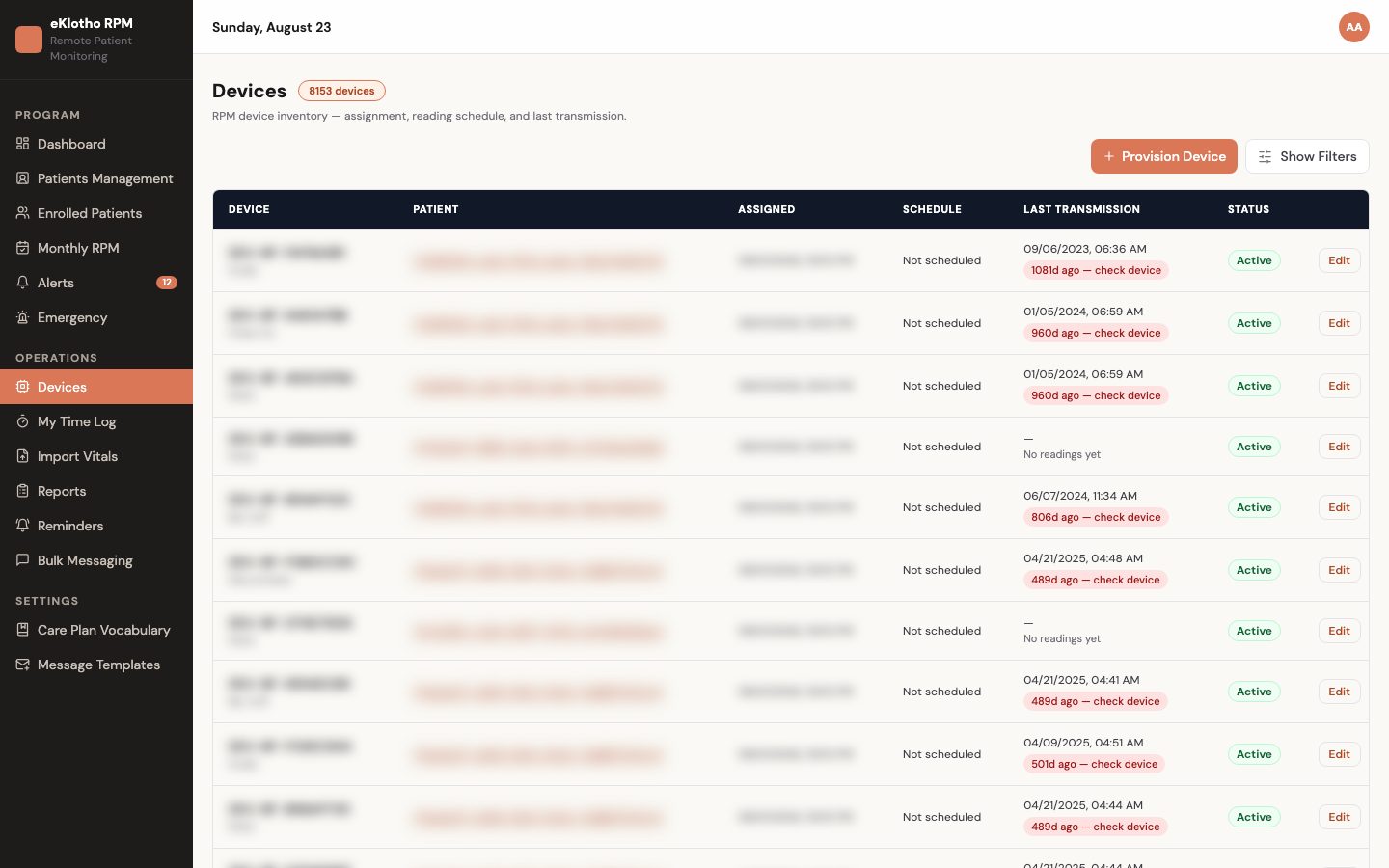
The app follows a fixed screen map. A program dashboard shows enrollment, reading-day eligibility, care-time tiers, device health, open alerts and workload per care manager. An enrolled-patients list opens into a per-patient overview with the vitals trend, time log, devices and alert history. A monthly board counts distinct reading days toward 16 and shows each patient's care-time tier. An alert inbox carries threshold and compliance rules; an emergency stream carries critical readings and patient SOS. Device inventory, a personal time log and compliance exports round it out. Roles are simple: directors and care managers see the program, clinic staff see their own panel.
Three rules from the original eKlotho program are preserved on purpose. A reading day is a calendar day in the program's time zone with at least one device reading, counted once no matter how many sensors reported. Care time is tiered in twenty-minute buckets — the first 20 minutes, the next 20, the next 20 — computed by the server from an append-only log. And logging time from an alert resolves that alert, so the work and the record happen in one motion. What the app deliberately does not do is count money: reading days and tiers are compliance facts, and billing eligibility stays with the practice and its payers.